
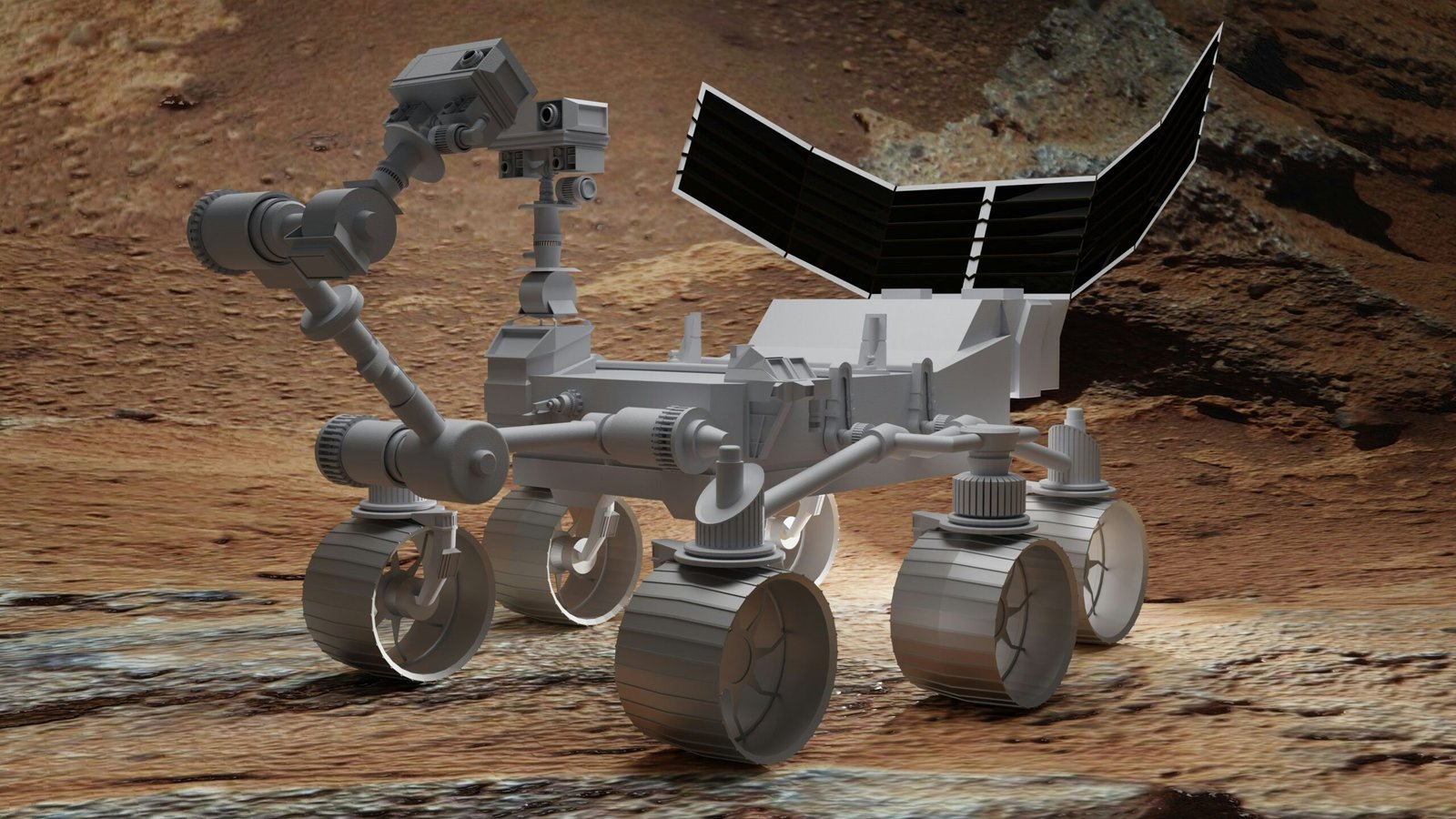
AI-Powered Mars Missions: The Future of Space Technology
Mars has always been a symbol of human curiosity, and in recent years, space agencies around the world have intensified their efforts to explore the Red Planet. Today, Artificial Intelligence (AI) is becoming one of the most powerful tools helping scientists push the boundaries of space exploration. From analyzing terrain to supporting autonomous rovers, AI is transforming the way we plan and execute Mars missions. This article explores how AI is shaping the future of Mars exploration and revolutionizing space technology.
AI in Rover Navigation
One of the biggest challenges in Mars missions is navigating the planet’s rough and unpredictable terrain. Traditional rovers rely on instructions sent from Earth, which can take up to 20 minutes to reach Mars. This time delay makes real-time control nearly impossible.
AI solves this problem by allowing rovers to navigate autonomously. Equipped with machine learning algorithms and advanced sensors, rovers like NASA’s Perseverance can identify obstacles, choose optimal paths, and make quick decisions without waiting for Earth-based commands. This not only speeds up exploration but also increases mission safety and efficiency.
AI for Scientific Data Analysis
Mars missions generate enormous amounts of data from images and soil samples to atmospheric readings. Manually analyzing this data is time-consuming and prone to errors. AI steps in by processing huge datasets within minutes, identifying patterns that humans might miss.
Deep learning models help detect mineral compositions, signs of ancient water, or unusual geological formations. AI tools can also scan thousands of images to highlight areas worth exploring, making scientific discoveries faster and more accurate.
Autonomous Decision-Making in Spacecraft
Spacecraft traveling to Mars need to respond quickly to unexpected situations like dust storms, system failures, or climate shifts. AI enables spacecraft to self-diagnose and solve problems during the journey.
For example, AI algorithms monitor spacecraft health, adjust energy usage, and even reroute systems if any malfunction occurs. This autonomy reduces the need for constant human intervention and ensures mission stability—especially during long-duration flights.
AI-Assisted Robotics for Habitat Building
Future Mars missions aim to build human bases on the planet. AI-powered robots will play a crucial role in constructing habitats, setting up communication systems, and preparing the environment before astronauts arrive.
These robots will use AI to understand terrain conditions, transport materials, and perform repetitive tasks with high accuracy. This reduces risks to human astronauts and makes early settlement possible.
AI and Human-Astronaut Collaboration
AI will not replace astronauts; instead, it will become their strongest companion. Smart AI assistants can monitor astronaut health, predict emergencies, and provide real-time solutions during critical situations.
Machine learning systems can also help astronauts make scientific decisions—such as choosing the best samples or analyzing Martian weather to plan safe routes. This collaboration between humans and AI creates a more efficient and safer exploration environment.



One thought on “AI-Powered Mars Missions: The Future of Space Technology”