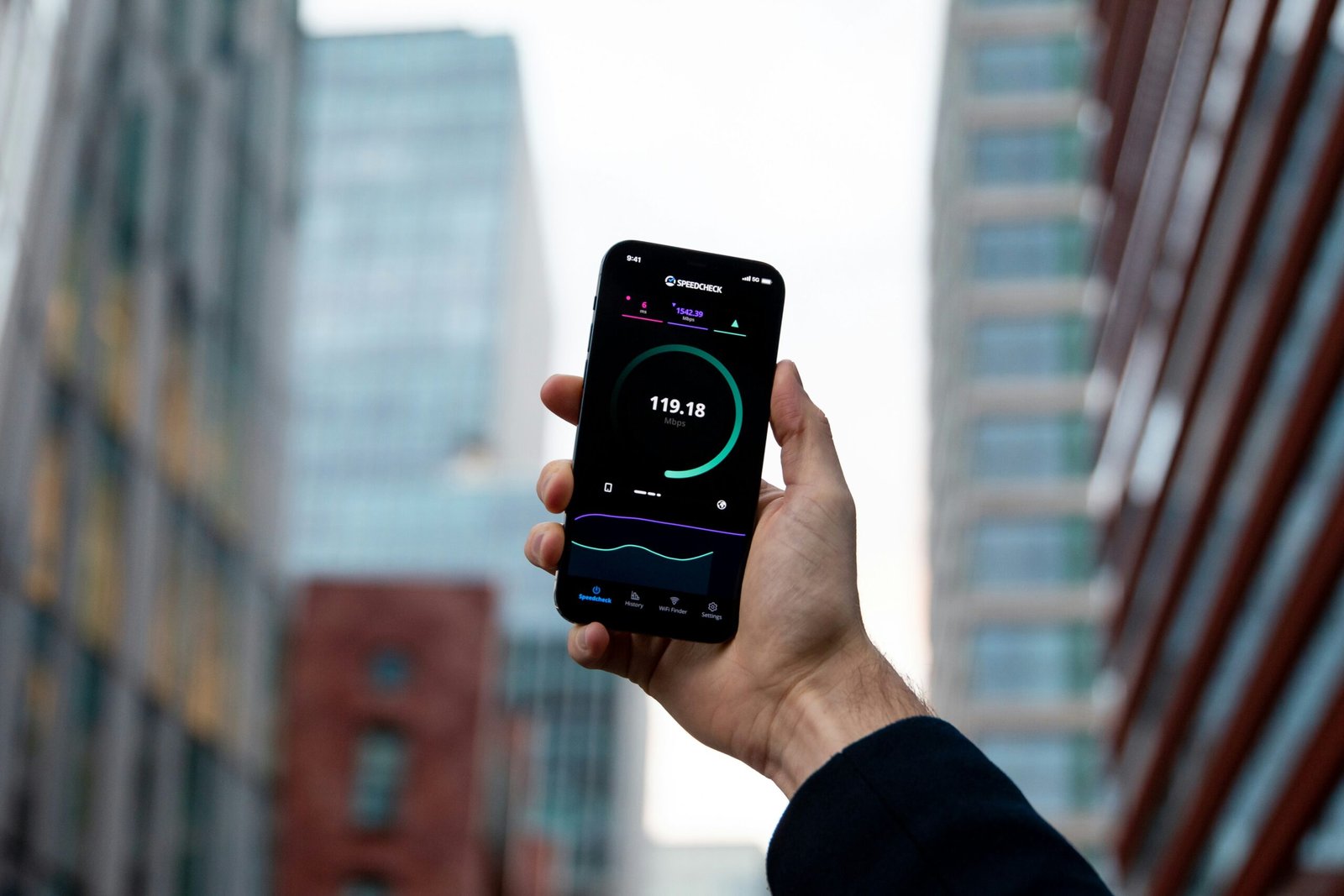
What is 5g technology and how it works
5G, or fifth-generation wireless technology, is the latest evolution in mobile networks. It promises faster speeds, lower latency, higher capacity, and new use cases that extend beyond traditional smartphones to industries, vehicles, and smart devices. Here’s a clear overview of what 5G is and how it operates.
What is 5G?
5G is the successor to 4G LTE and represents a significant leap in wireless communication. It operates across a broader range of frequencies, including mid-band (roughly 1–6 GHz) and high-band, also known as millimeter wave (mmWave) frequencies (24–100 GHz). This spectrum diversity enables both wide coverage and ultra-fast data rates.
Key goals of 5G:
- Faster speeds: Real-world download rates that can reach multiple gigabits per second in ideal conditions.
- Lower latency: Response times as low as 1 millisecond for certain applications, enabling near-instant communication.
- Increased capacity: More devices can connect simultaneously without congestion.
- New use cases: Enhanced mobile broadband, ultra-reliable low-latency communications (URLLC), and massive machine-type communications (mMTC) for the Internet of Things (IoT).
How 5G Works: Core Concepts
1. New Radio (NR) Standard
5G uses the 3rd Generation Partnership Project (3GPP) New Radio (NR) standard. NR defines the air interface between 5G devices (phones, IoT sensors) and the network. It introduces flexible waveform options, scalable numerology, and advanced coding schemes to optimize performance across frequencies and use cases.
2. Spectrum Utilization
- Low-band (sub-1 GHz): Offers wide coverage and good building penetration but lower speeds.
- Mid-band (1–6 GHz): Balances coverage and speed, making it ideal for urban deployments.
- High-band (mmWave, 24–100 GHz): Delivers extremely high speeds but has limited range and penetration, suitable for dense urban areas and hotspots.
3. Massive MIMO and Beamforming
5G networks deploy large antenna arrays, known as Massive MIMO, to transmit multiple data signals simultaneously. This increases capacity and spectral efficiency. Beamforming directs radio energy toward specific users rather than broadcasting in all directions, improving signal quality and reducing interference.
4. Network Slicing
A powerful feature of 5G is the ability to create multiple virtual networks on a shared physical infrastructure, called network slicing. Each slice can be customized for a particular service (e.g., ultra-reliable low-latency for autonomous vehicles or high-bandwidth for video streaming), ensuring appropriate performance and security.
5. Edge Computing
To reduce latency, 5G networks often pair with edge computing, where data processing happens closer to the user at the network’s edge. This minimizes round-trip times and enables real-time applications like augmented reality (AR), gaming, and industrial automation.
How 5G Improves Over 4G
- Speed: 5G can deliver significantly higher peak and real-world speeds due to broader bandwidth, smarter modulation, and advanced coding.
- Latency: Ultra-low latency enables quick device-to-network communication, critical for time-sensitive tasks.
- Capacity: More simultaneous connections are supported, reducing congestion in crowded areas.
- Reliability: Network slicing and QoS management improve service consistency for diverse applications.
Practical Use Cases
- Smartphones and home broadband: Faster downloads, smoother streaming, and responsive online experiences.
- Autonomous vehicles: Real-time communication with other cars and infrastructure for safer navigation.
- Industrial IoT: Remote monitoring, predictive maintenance, and robotics with reliable connectivity.
- Healthcare: Remote surgery and telemedicine with low latency and robust connections.
- Augmented and virtual reality: Immersive experiences with high data throughput and minimal delay.
Challenges and Considerations
- Infrastructure cost: Deploying dense 5G networks, especially mmWave, requires substantial investment.
- Coverage gaps: mmWave’s limited range means continued reliance on sub-6 GHz bands in many areas.
- Security: As networks become more complex with network slicing and IoT, robust security measures are essential.
- Device availability: Widespread 5G adoption hinges on compatible devices and consumer awareness.